A GUIDE TO THE ALTERNATIVE HISTORY OF BELGRADE
As part of its fifth international acting and directing school, the DAH Theater realizes the play "A Guide to the Alternative History of Belgrade". The performance was performed at certain points in the city center - in Bezistan, the park on Trg Republike, in front of the Central House of the Army, in the University Park next to Student Square and on the Great Stairs on Kalemegdan. The points where the main scenes took place were connected by a procession that took place in the form of a "tourist" tour of the city, where guides - actors showed individual locations and interpreted their history. [2006]
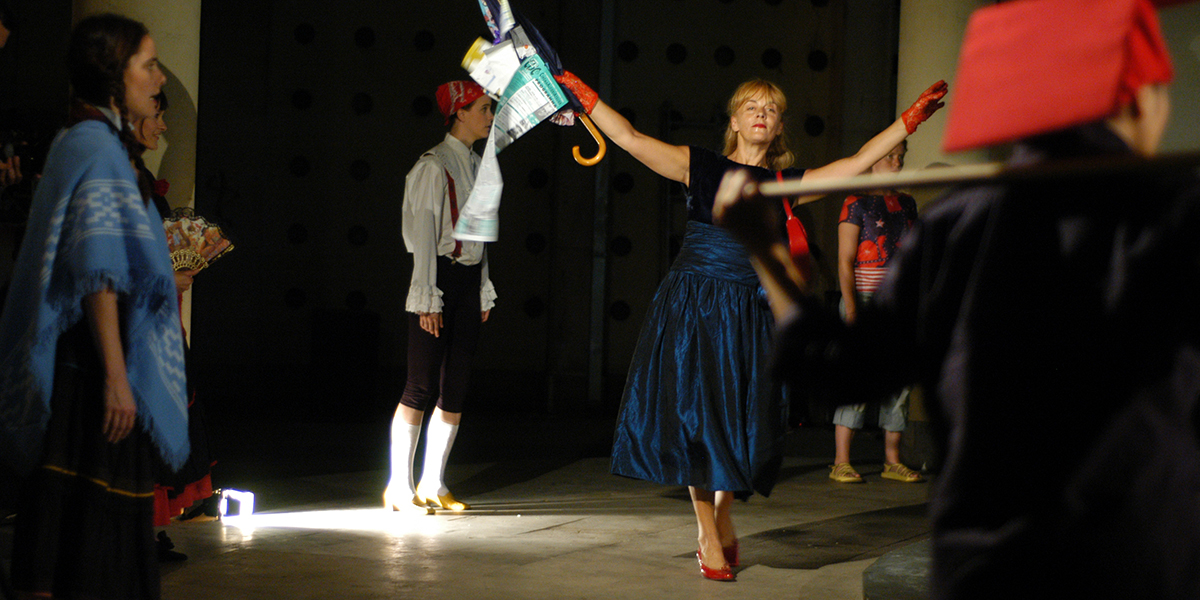
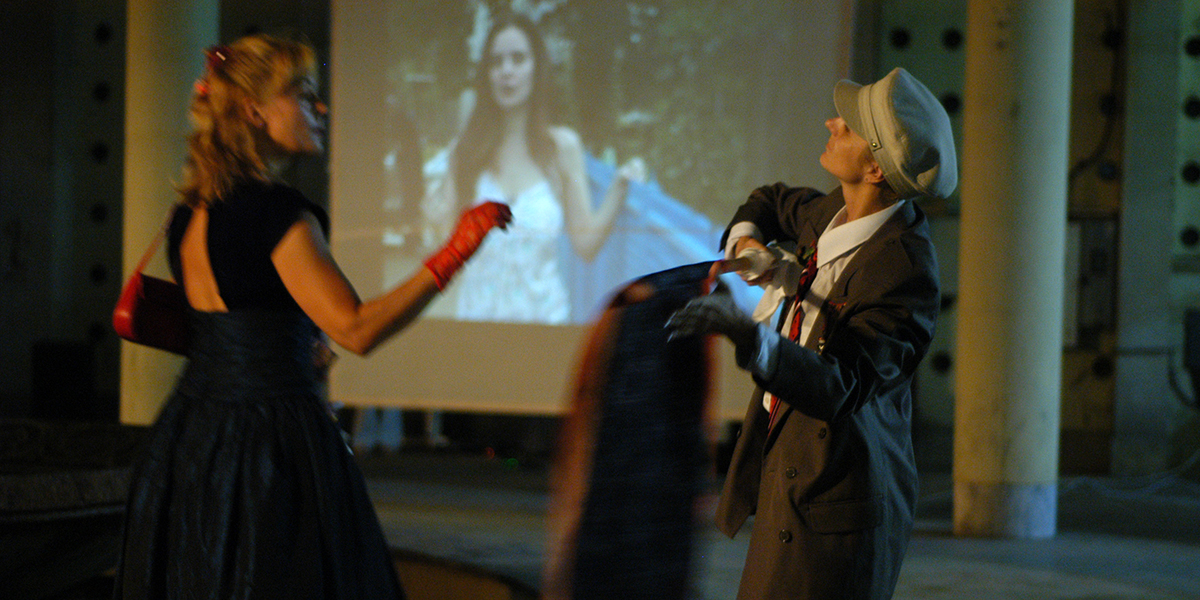
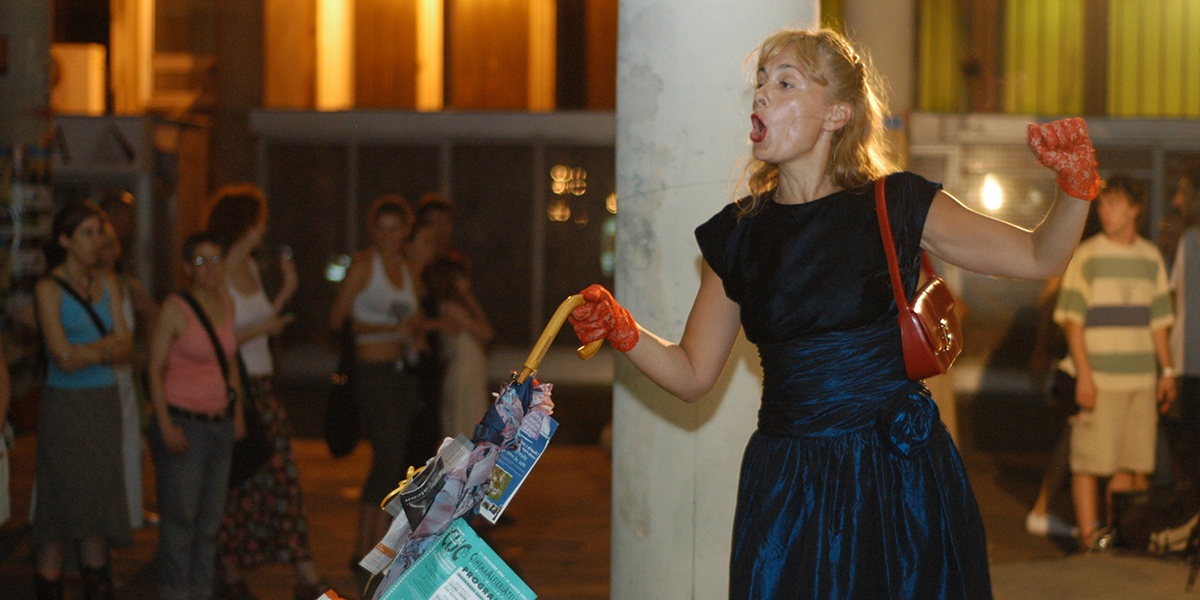
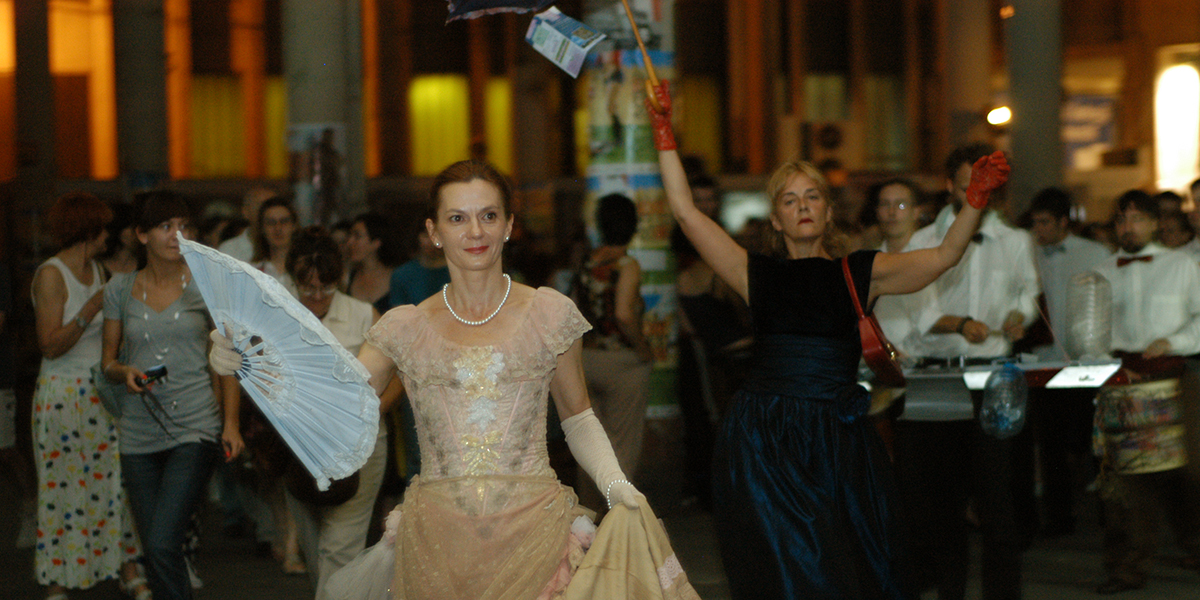
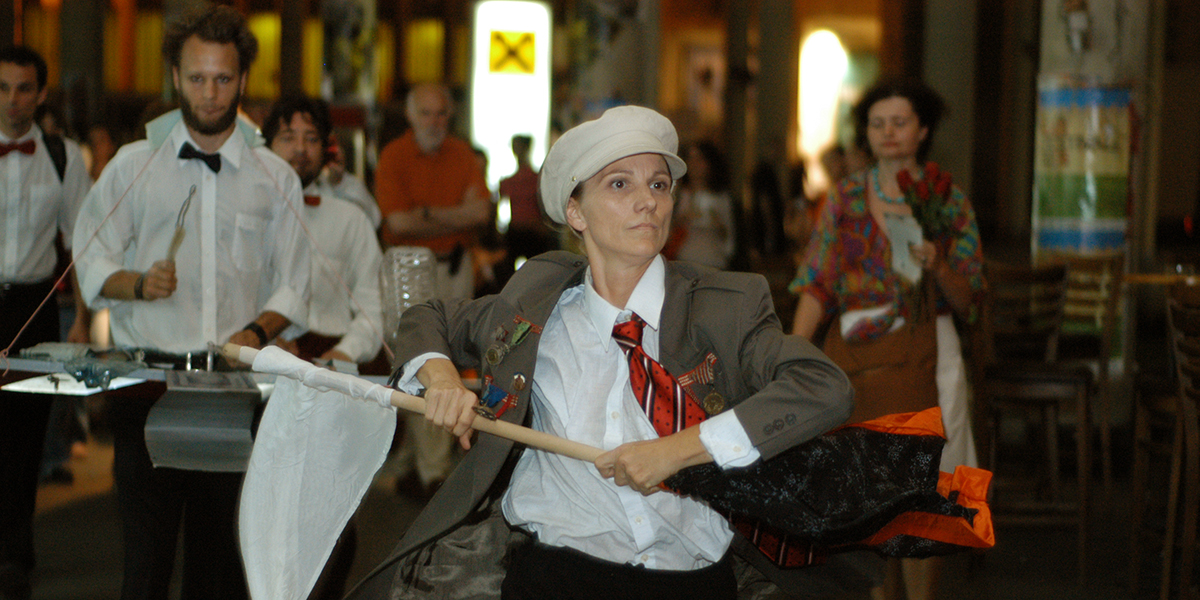
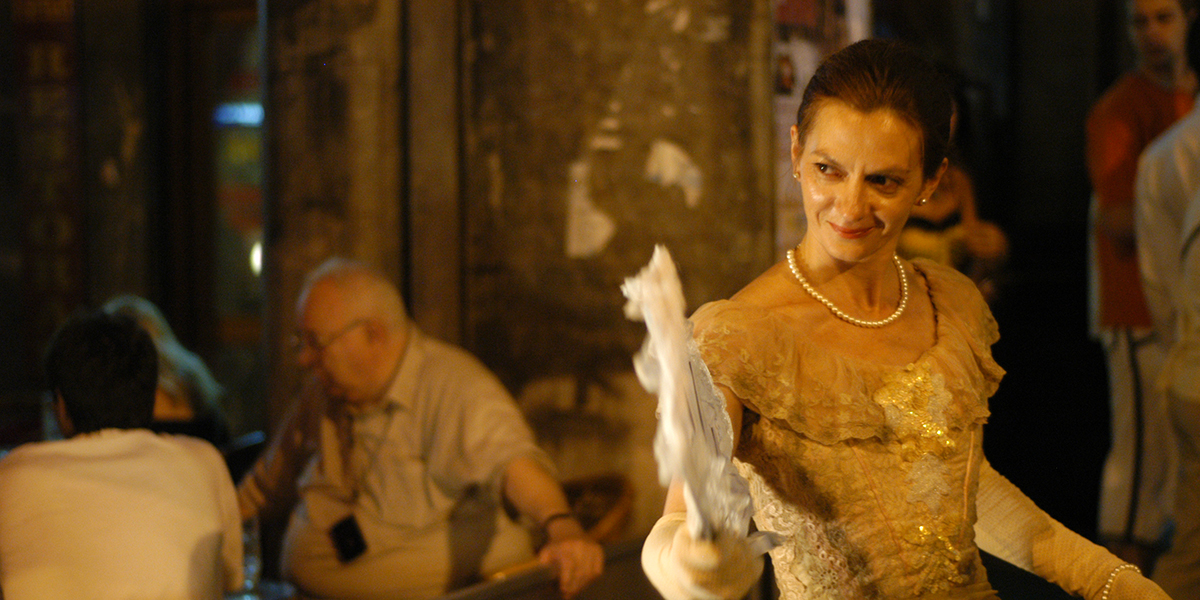
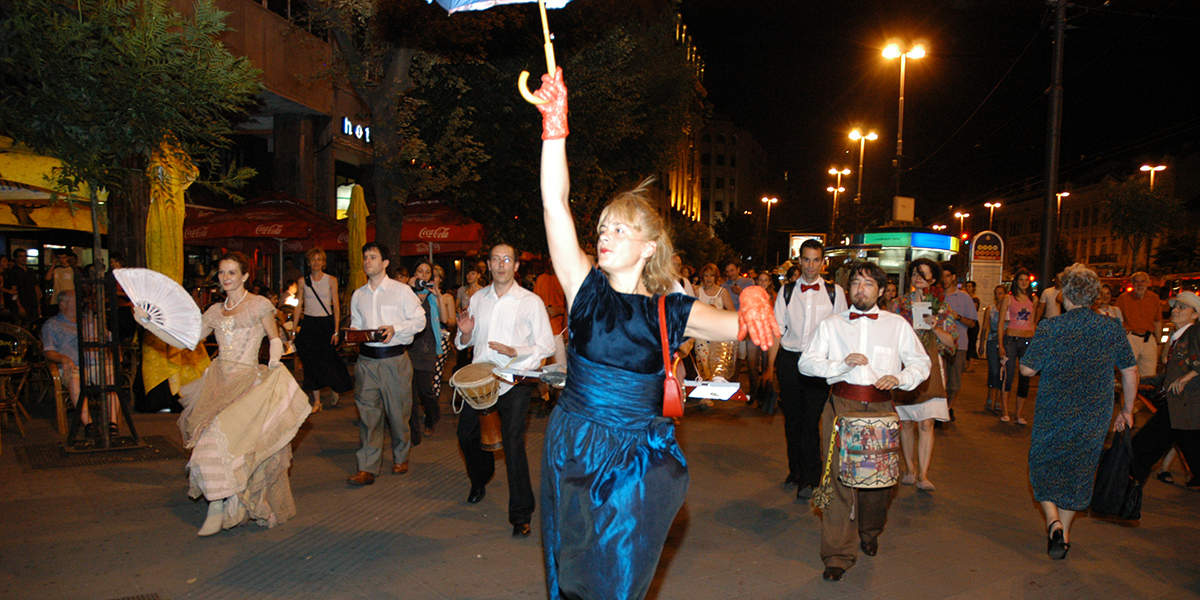
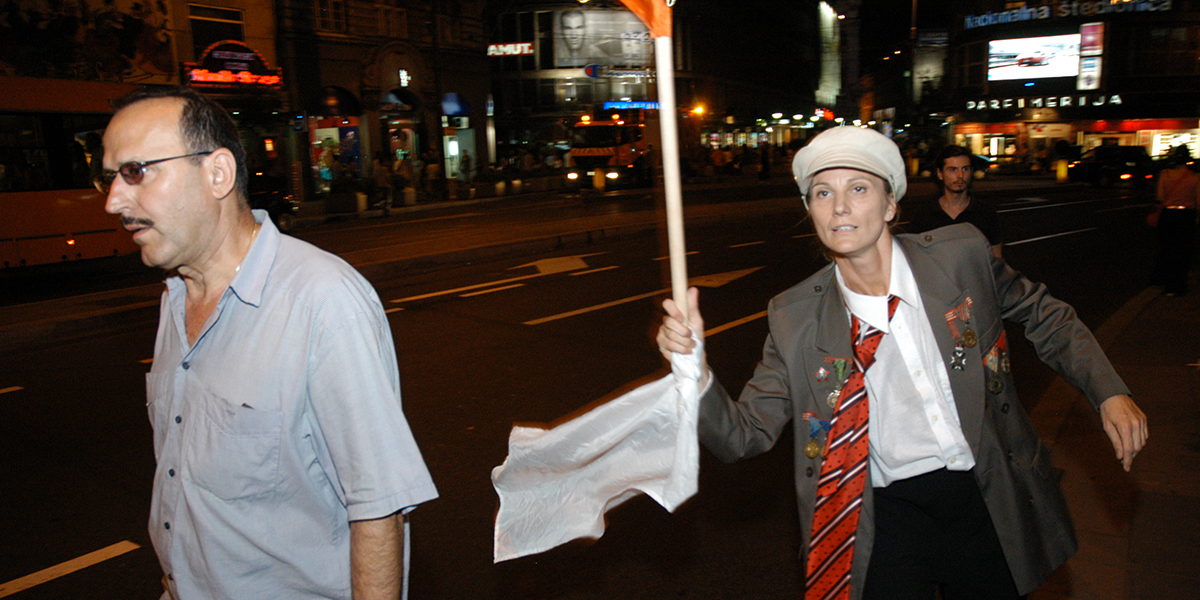
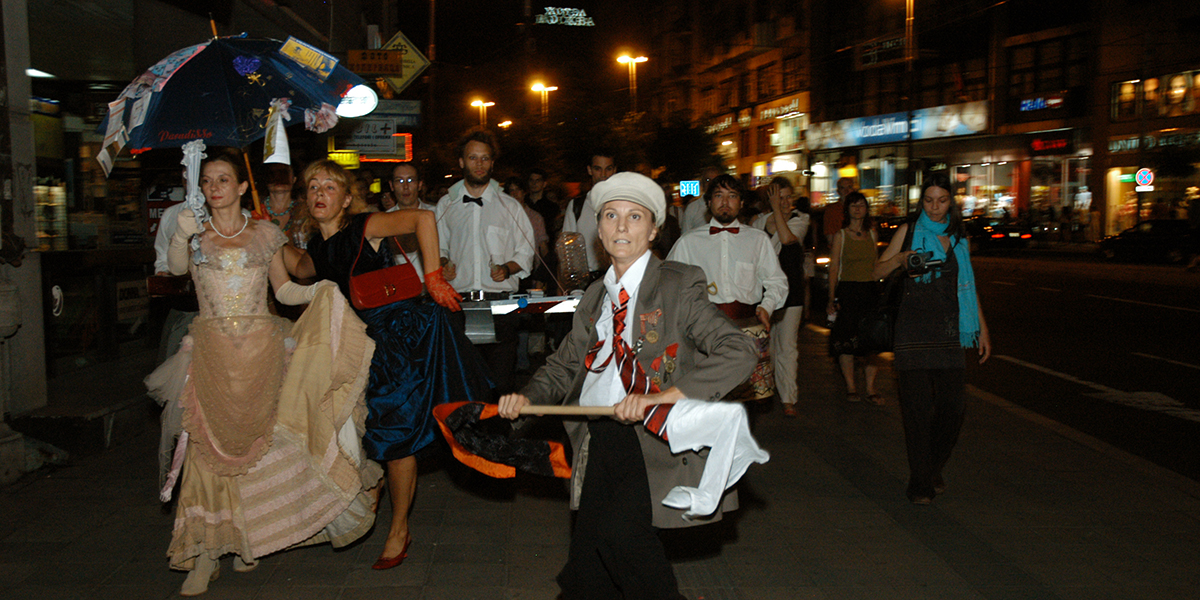
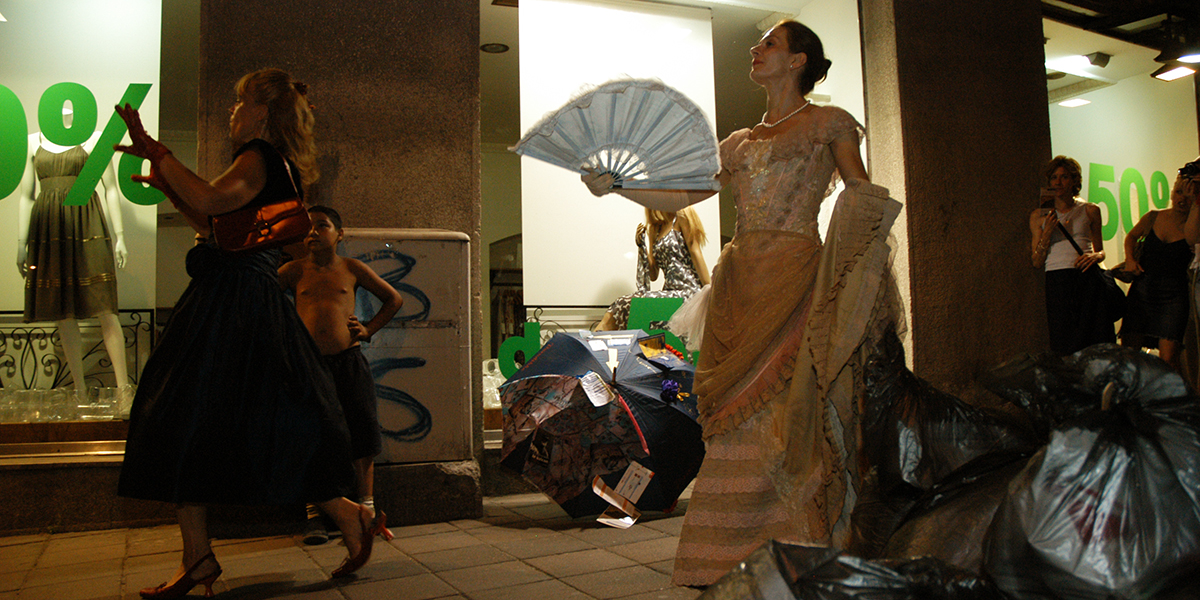
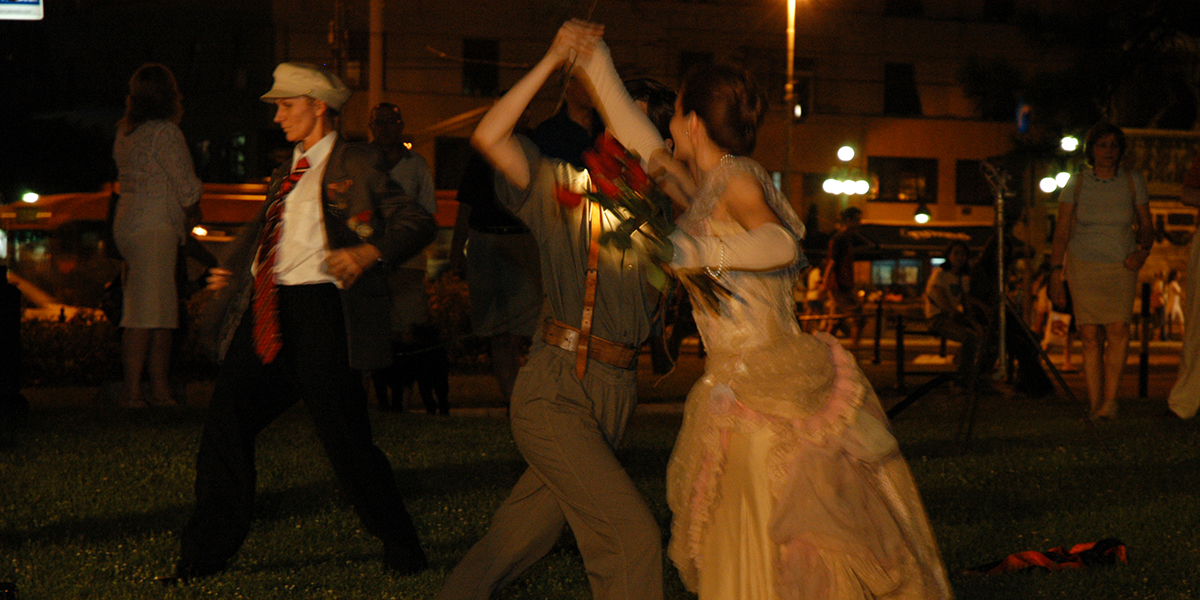
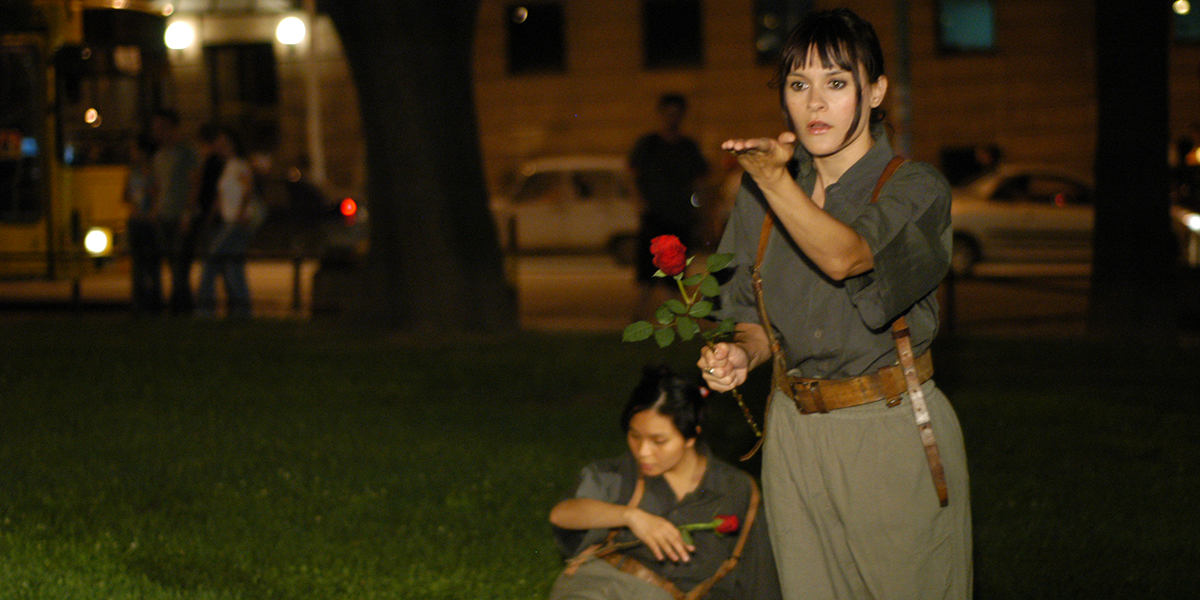
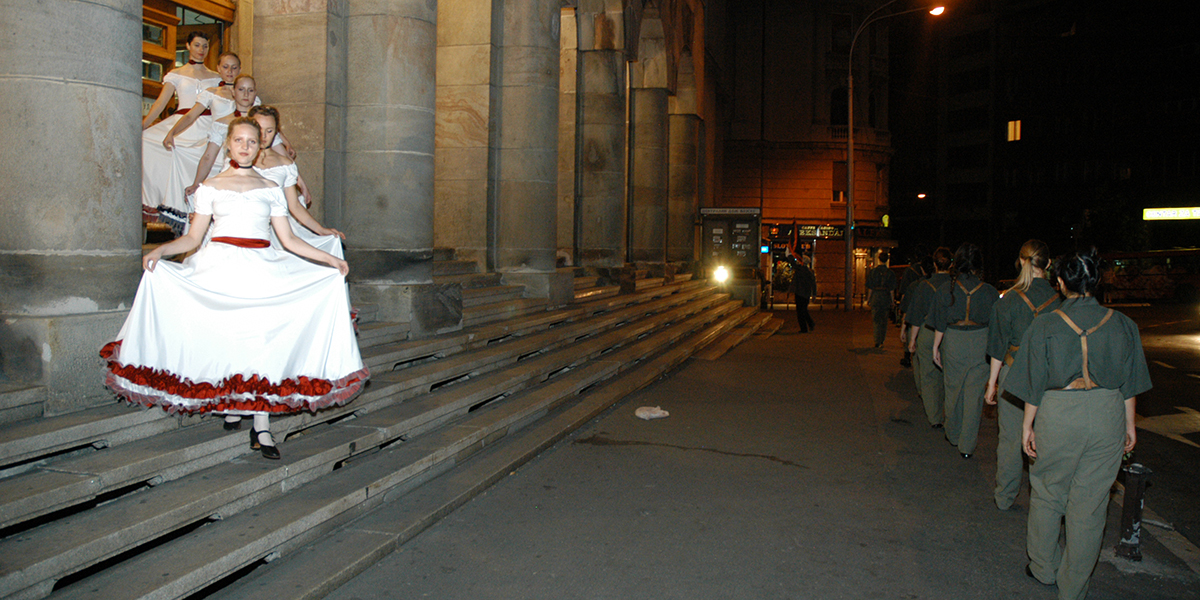
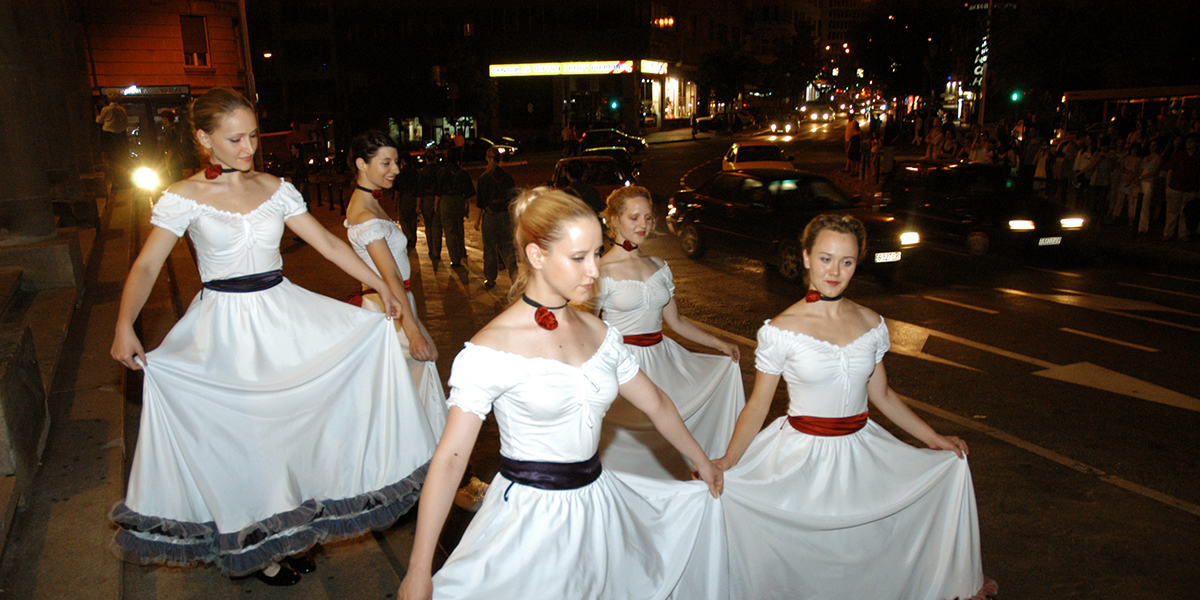
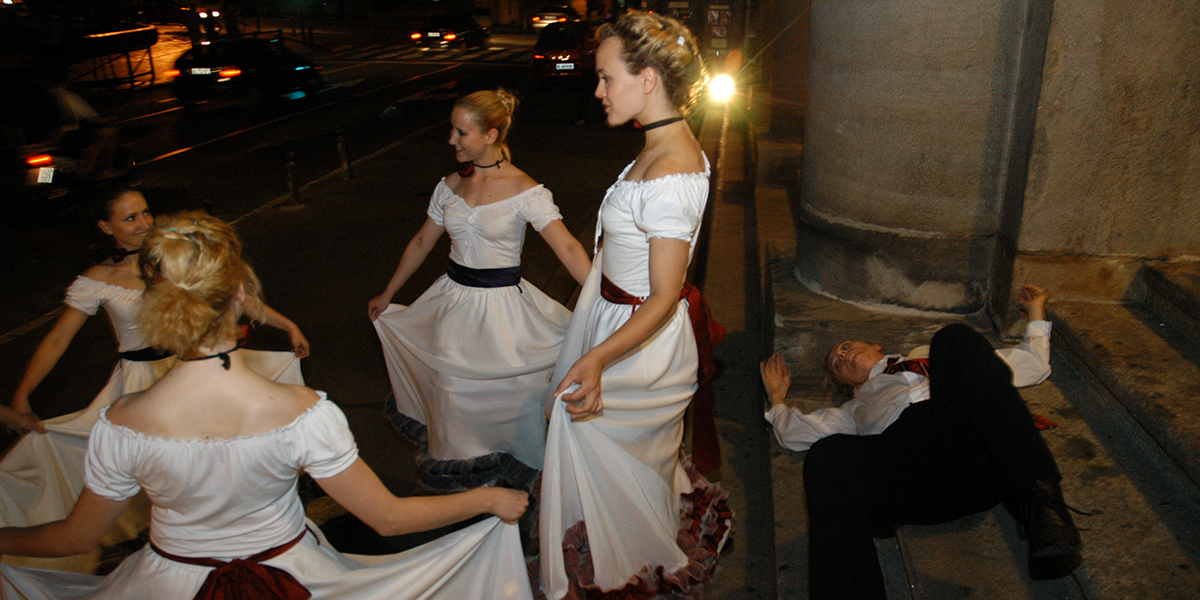
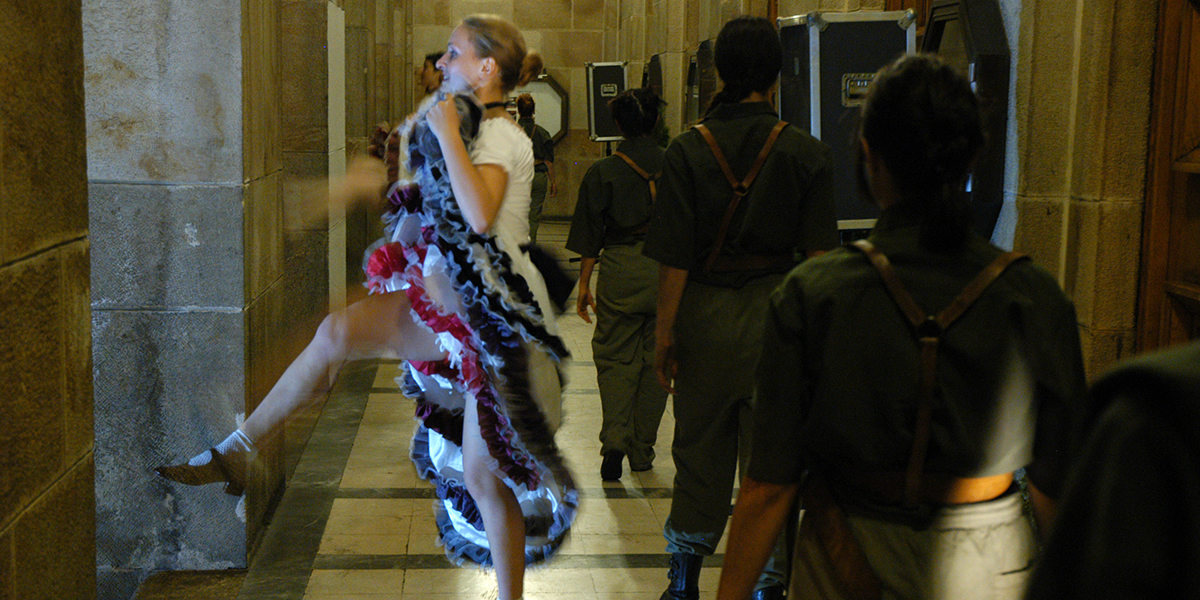
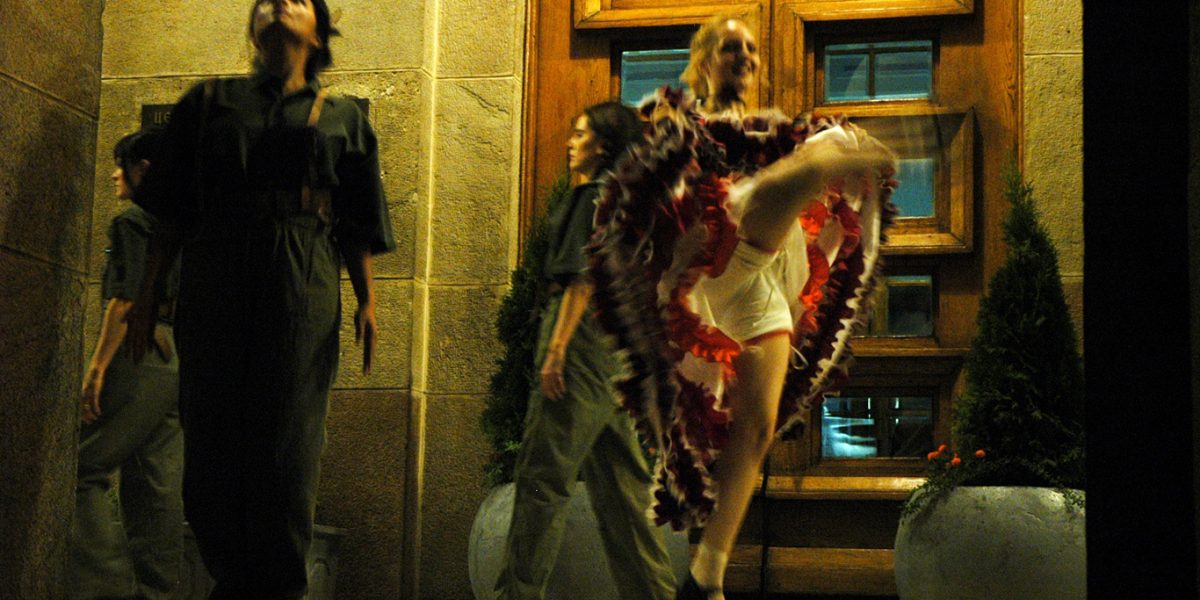
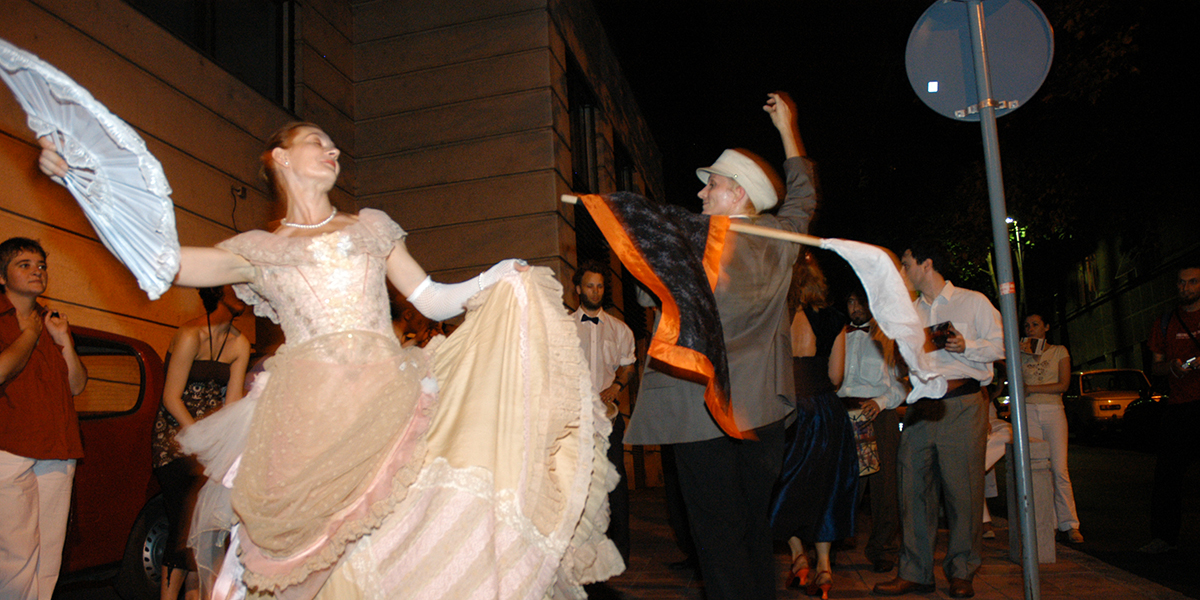
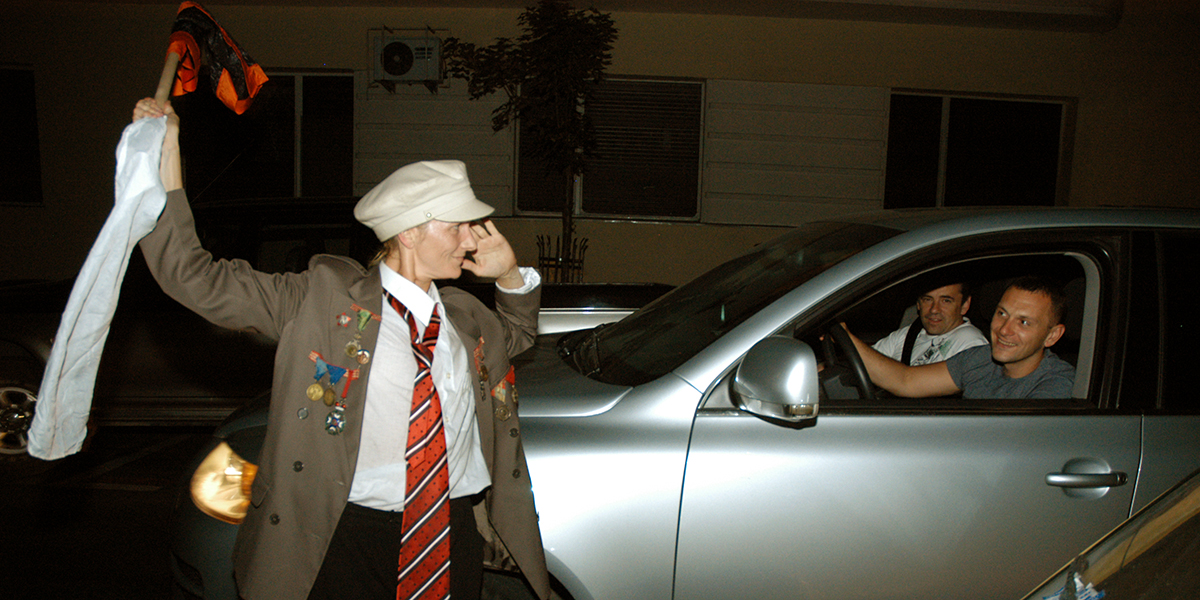
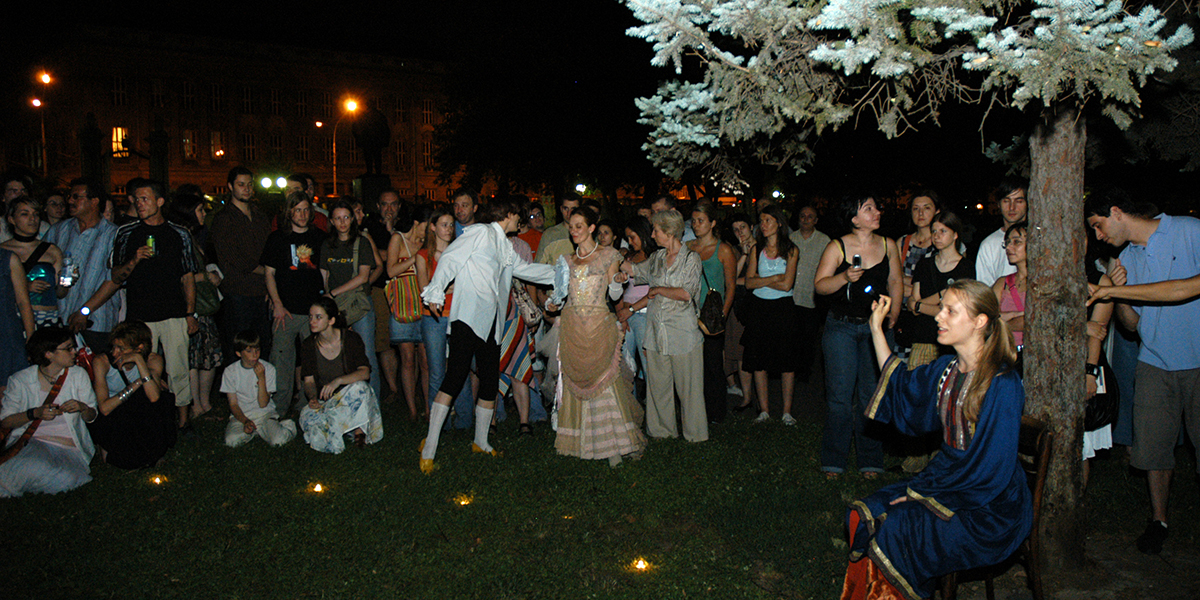
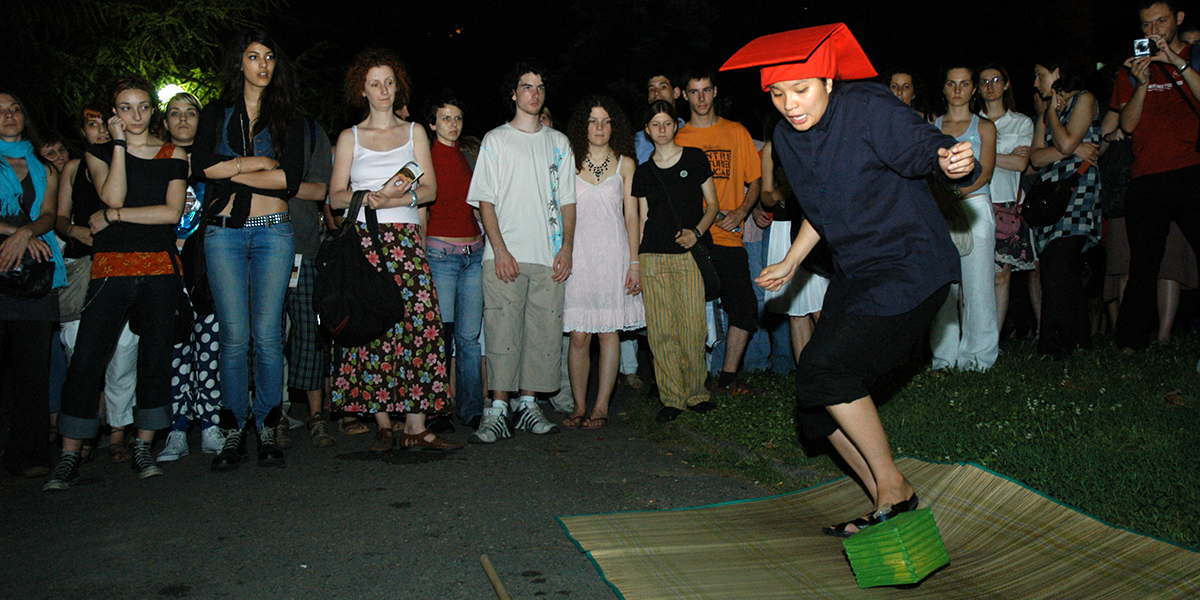
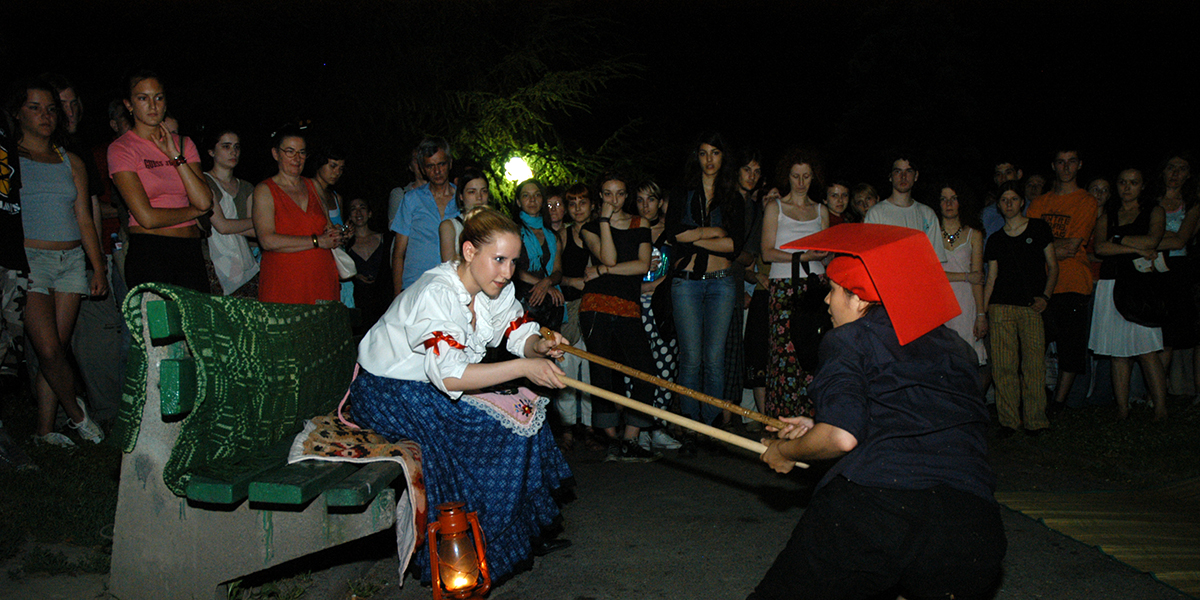
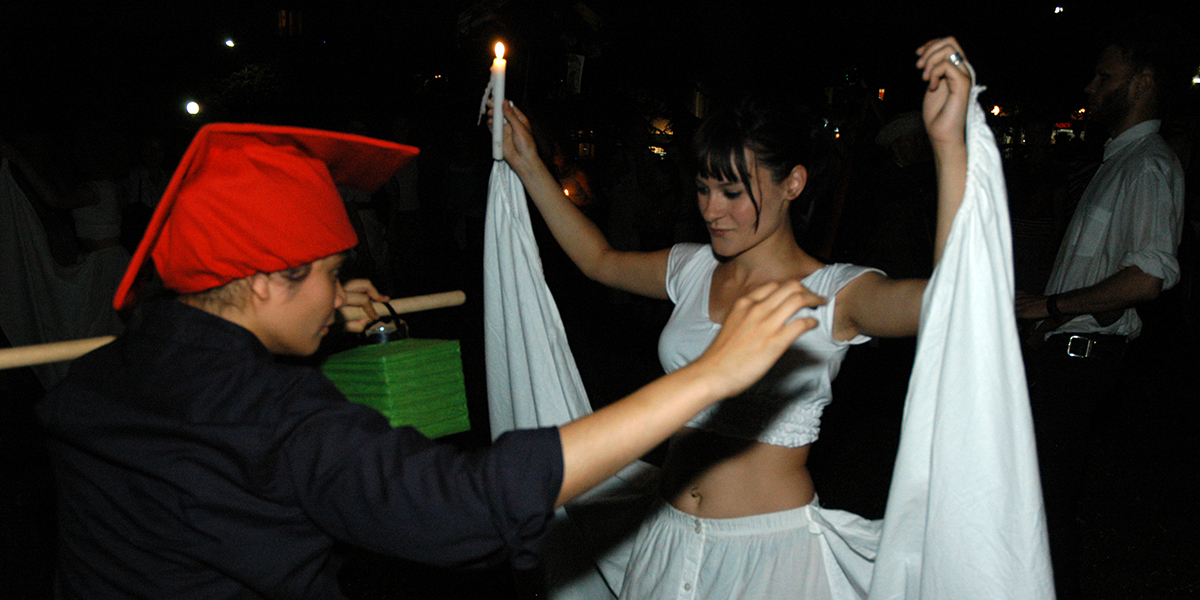
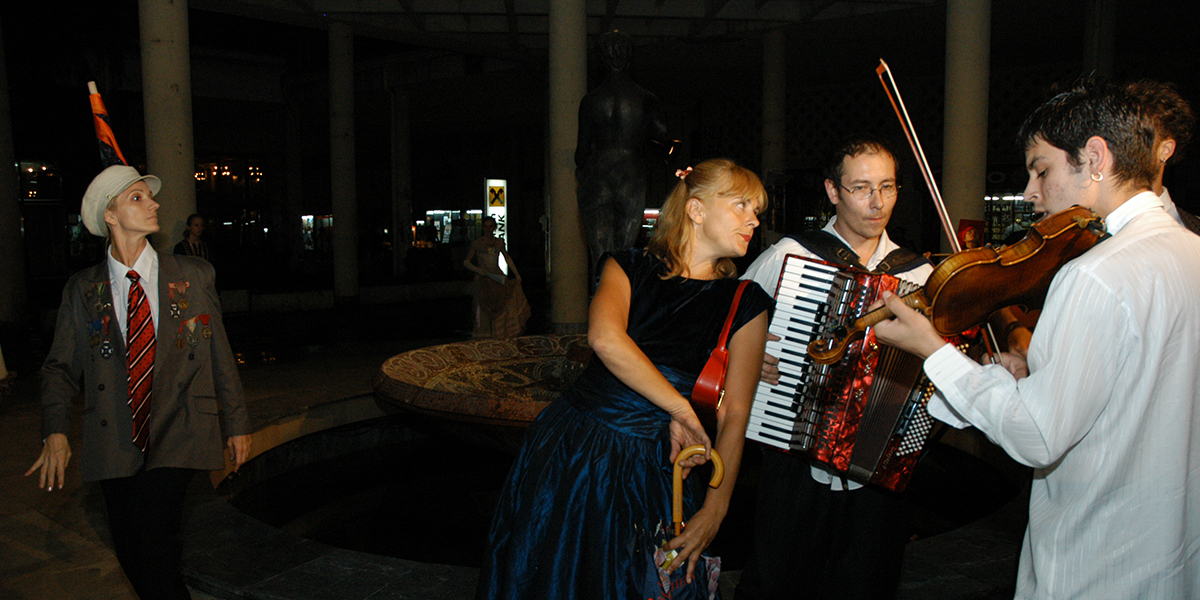
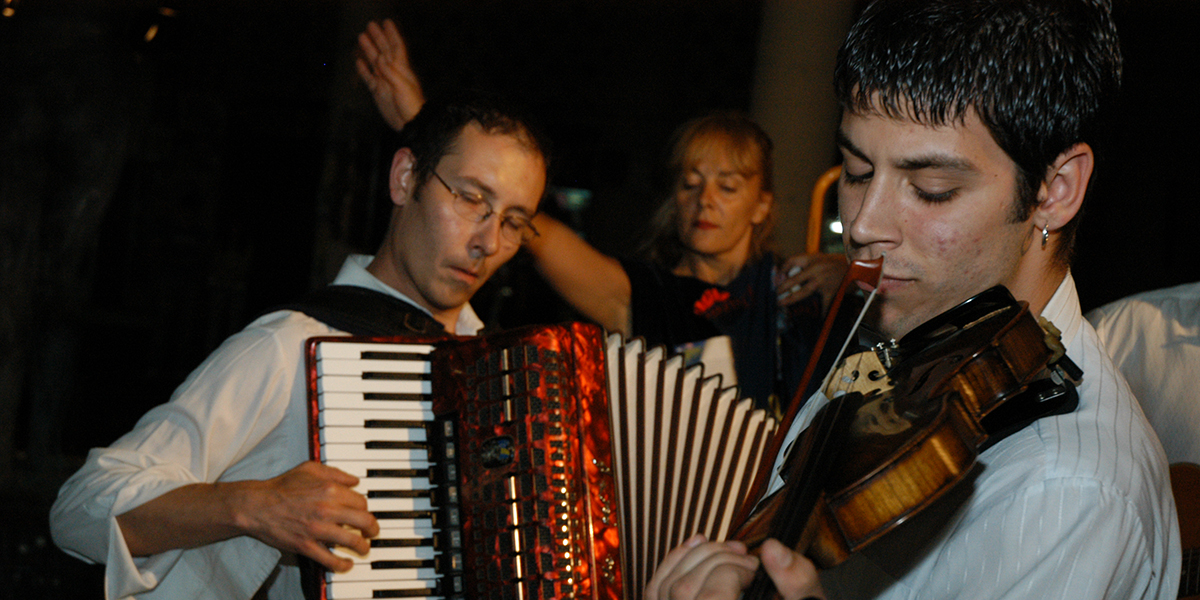
The theme of the play is the alternative history of Belgrade, the one that is not necessarily taught in schools, but the one written by the stormy and complex events that marked our city during the past centuries. That alternative history of Belgrade is reflected in the change of street names in the capital, which every generation of Belgraders has experienced at least once during their lifetime.
The first found official data on the names of Belgrade streets (alleys) dates from 1848. The crossing of streets continues in 1896, 1930, 1943, 1946, 1997, 2001... The main street of our city will serve as an example. It received the name Kralja Milana in 1872. In 1946, its name was changed to Marshal Tito, then in 1997, to Serbian Rulers, and the name Kralja Milana was returned to it after the fall of the Milošević regime. Given that the change of street name reflects the change of politics, system, and lifestyle and values, it tells us a lot about the history of our city, i.e. our country and society. That history is hidden and many Belgraders don't know why that change happened. Many younger Belgraders are not even aware of these changes and therefore of the history of our society, which affects their future. Out of 2398 streets in Belgrade, only 127 are named after exceptional women.
Director: Dijana Milošević
They play /DAH Theatre:
Jugoslav Hadzic
Aleksandra Jelic
Sanja Krsmanović Tasić
Maja Mitic
Participants of DAH Theater's fifth international school for actors and directors:
Olivier Bachmann, Linda Forsell, Anna Carina Garber, Barbara Keller, Dita Lang, Howard Scott Lotker,
Ivana Milenović, Iva Music, Hernan Petit, Beatriz Pizano, Macon Reed, Irene Rubio,
Mei Ann Teo, Donka Torov, Mirjana Vuković
Other participants: Lidija Milić, Nevena Petrović, Mina Timotijević, Kim Warsén
Film: Neša Paripović
Film production and program design: Jovan Čekić
Program translation: Sanja Krsmanović Tasić
Organization: Elizabeta Kurela, Suzana Tasić Anović, Milena Ristić
Assistant costume designers: Kruna Domić, Smilja Ignjatović, Tijana Joksimović, Sanja Manakoski
Lighting: Radomir Stamenković
Photo: Đorđe Tomic
Activities of the DAH Theater Center for Theater Research were supported by: Rockefeller Brothers Fund
Realization of the play was made possible by: City of Belgrade - Secretariat for Culture and the Ministry of the Republic of Serbia